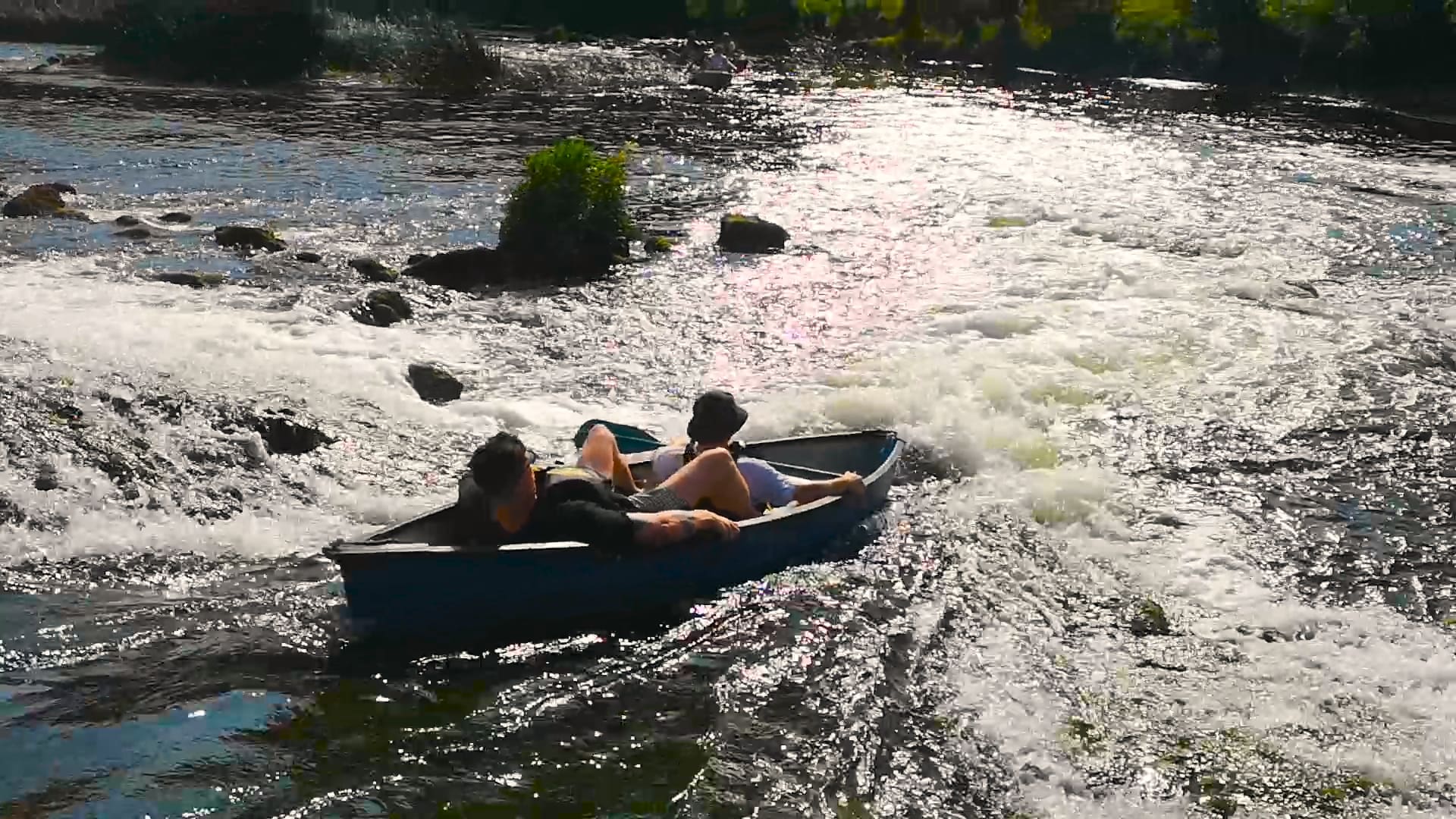
Before you paddle, take a moment to read our essential safety tips and guidelines to help you stay prepared, informed, and confident on the river.
We will inform you if the weather is not looking suitable. We rarely have to cancel trips in the sunny south East.
If there is a red or yellow warning your trip will be cancelled and you will be given a full refund. If the weather isn’t looking very favourable and not to your liking, you can reschedule, subject to availability.
You must wear your provided bouyancy aide / personal flotation device at all times while on the river to ensure your safety.
The safest and most balanced way to get into your canoe is by first putting your canoe fully into the water along the bank or jetty parallel to the shore. Then sit on the bank or jetty; put your two feet into the canoe spaced to either side and put your hands on the side rails then sit down slowly and balanced.
When loading, firstly make sure you are not going to overload the canoe. Ensure that your load is securely tied to the canoe so it does not move around.
You need to plan your trip according to your canoeing or kayaking experience. Be honest and realistic to ensure you do not endanger yourself or others by overstating your experience or tackling conditions above your capability. It is highly recommended to canoe in a group with at least 3 people and 2 crafts. This will ensure if a paddler or canoe gets into trouble support can be provided by the other paddlers and canoe.
It’s a good idea to let someone know about your canoe or kayaking trip in advance. Notify them of your companion names, departure and arrivals times and locations and any destinations in between.
Each stream or river is different and presents various challenges and dangers. Familiarise yourself with the body of water before you set out on your trip. Plan your trip according to your skill and ability and gradually progress from one skill level to the next.
The following equipment is recommended for your canoeing or kayaking trip;
• Spare paddle
• Bow and stern lines
• Extra safety throwing line – at least 50 feet long
• First Aid Kit
• Waterproof Dry Bag – to store smaller items including; food, sunscreen, bug repellent, etc.
• Water baler – half soft drink bottle or small bucket for baling out water from boat
Footwear is highly recommended whilst canoeing. The terrain, especially on the river bottom can be very hazardous and bare feet will provide no protection. Sports shoes will provide protection and will dry out quicker if they get wet.
Offer assistance to other capsized boats, remember people first and then equipment. If the water is cold get them ashore as soon as possible to dry off and warm up. Be aware that they may be confused so remain calm and encourage them to do likewise.
If someone else’s canoe has dumped offer your assistance. If it comes down to a rescue, remember…it’s the people first, then the equipment. If it’s cold, get them ashore, dry them and warm them immediately. It may not occur to them that they’re uncomfortable because of confusion. Above all, keep calm and encourage the “dunkees” to do likewise.
Because there’s nothing quite like the freedom of the river. With Paddle Your Own Canoe, you set the pace—exploring scenic waterways, discovering hidden spots, and soaking up the peace and beauty of the Barrow. We make it easy and accessible, with reliable gear, local knowledge, and flexible trip options. Whether you're chasing adventure or just need a break from the noise, this is your chance to slow down and reconnect—with nature, with friends, or simply with yourself.