Water Safe Info

Your safety on the water matters.

Before you paddle, take a moment to read our essential safety tips and guidelines to help you stay prepared, informed, and confident on the river.

Ariel view of river Barrow surrounded by green trees under a blue sky.
Three smiling women in a canoe on a sunny day.
Cloudy weather icon

Weather Conditions

We will inform you if the weather is not looking suitable. We rarely have to cancel trips in the sunny south East.
If there is a red or yellow warning your trip will be cancelled and you will be given a full refund. If the weather isn’t looking very favourable and not to your liking, you can reschedule, subject to availability.

White life jacket icon

Wear a Personal Flotation Device

You must wear your provided bouyancy aide / personal flotation device at all times while on the river to ensure your safety.

White icon of man in a canoe on water

Getting Into & loading your Canoe

The safest and most balanced way to get into your canoe is by first putting your canoe fully into the water along the bank or jetty parallel to the shore. Then sit on the bank or jetty; put your two feet into the canoe spaced to either side and put your hands on the side rails then sit down slowly and balanced.

When loading, firstly make sure you are not going to overload the canoe. Ensure that your load is securely tied to the canoe so it does not move around.

Map icon

Trip Plan / Management

You need to plan your trip according to your canoeing or kayaking experience. Be honest and realistic to ensure you do not endanger yourself or others by overstating your experience or tackling conditions above your capability. It is highly recommended to canoe in a group with at least 3 people and 2 crafts. This will ensure if a paddler or canoe gets into trouble support can be provided by the other paddlers and canoe.

It’s a good idea to let someone know about your canoe or kayaking trip in advance. Notify them of your companion names, departure and arrivals times and locations and any destinations in between. 

People canoeing in Ireland on a sunny day.
Icon representing water

Water Conditions

Each stream or river is different and presents various challenges and dangers. Familiarise yourself with the body of water before you set out on your trip. Plan your trip according to your skill and ability and gradually progress from one skill level to the next.

PYOC white paddles on transparent background

Correct Equipment

The following equipment is recommended for your canoeing or kayaking trip;

•    Spare paddle
•    Bow and stern lines
•    Extra safety throwing line – at least 50 feet long
•    First Aid Kit
•    Waterproof Dry Bag – to store smaller items including; food, sunscreen, bug repellent, etc.

•    Water baler – half soft drink bottle or small bucket for baling out water from boat

White graphic design of a bodysuit for canoeing

What to wear

Dress appropriately for the current and expected weather conditions. You will require a wet or dry suit for the extreme cold, however layered clothing is recommended in more moderate temperatures. Clothing fabrics should provide warmth especially when wet. Cotton clothing is not recommended in cold weather as it draws heat away from the body when wet and increases the rate of hypothermia. Please also remember sun protection by wearing a wide brimmed hat and sunscreen.
essential gear for a 2026 Irish river canoe trip
Shoe icon on transparent background

Footwear

Footwear is highly recommended whilst canoeing. The terrain, especially on the river bottom can be very hazardous and bare feet will provide no protection. Sports shoes will provide protection and will dry out quicker if they get wet.

White kayak icon on a transparent background, symbolising water sports and outdoor activities

Don’t Crowd Fellow Canoeists

Don’t crowd other boats. Keep a safe distance behind boats especially in rapids and restricted passages. After you have navigated a difficult section, pull up and wait nearby to ensure all boats make it through. Be prepared to stop and offer assistance to your companions if required.
A man paddles a kayak, depicted within a white boat icon, symbolising water sports and outdoor adventure

Overboard in Current

If you do fall into the water ensure that you stay up stream of yours and other canoes. Floating up stream will avoid being pinned against a canoe or other obstruction. Stay away from objects in the water including strainers (trees and parts of trees or posts submerged subject to strong currents) and sweepers (low hanging tree branches which skim the water in a current). If the current does push you into an obstruction; lean your body toward the obstruction instead of pushing away.
Sunglasses icon

Eye Glasses & Sun Glasses

If you are planning to wear eye wear including eye glasses or sun glasses, ensure you secure them to your head as they may slip off if you capsize or fall in the water.
White sun icon

Handling Hot Weather – Paddling in the Heat

During the hot weather, remember to pack extra drinking water and keep well hydrated throughout the day. Ensure you take regular breaks in the shade and keep an eye on your fellow paddlers for signs of serious sunburn, heat exhaustion and sunstroke.
Two people paddling in a blue canoe on a calm Irish river surrounded by lush greenery.
White canoe graphic

If You Capsize

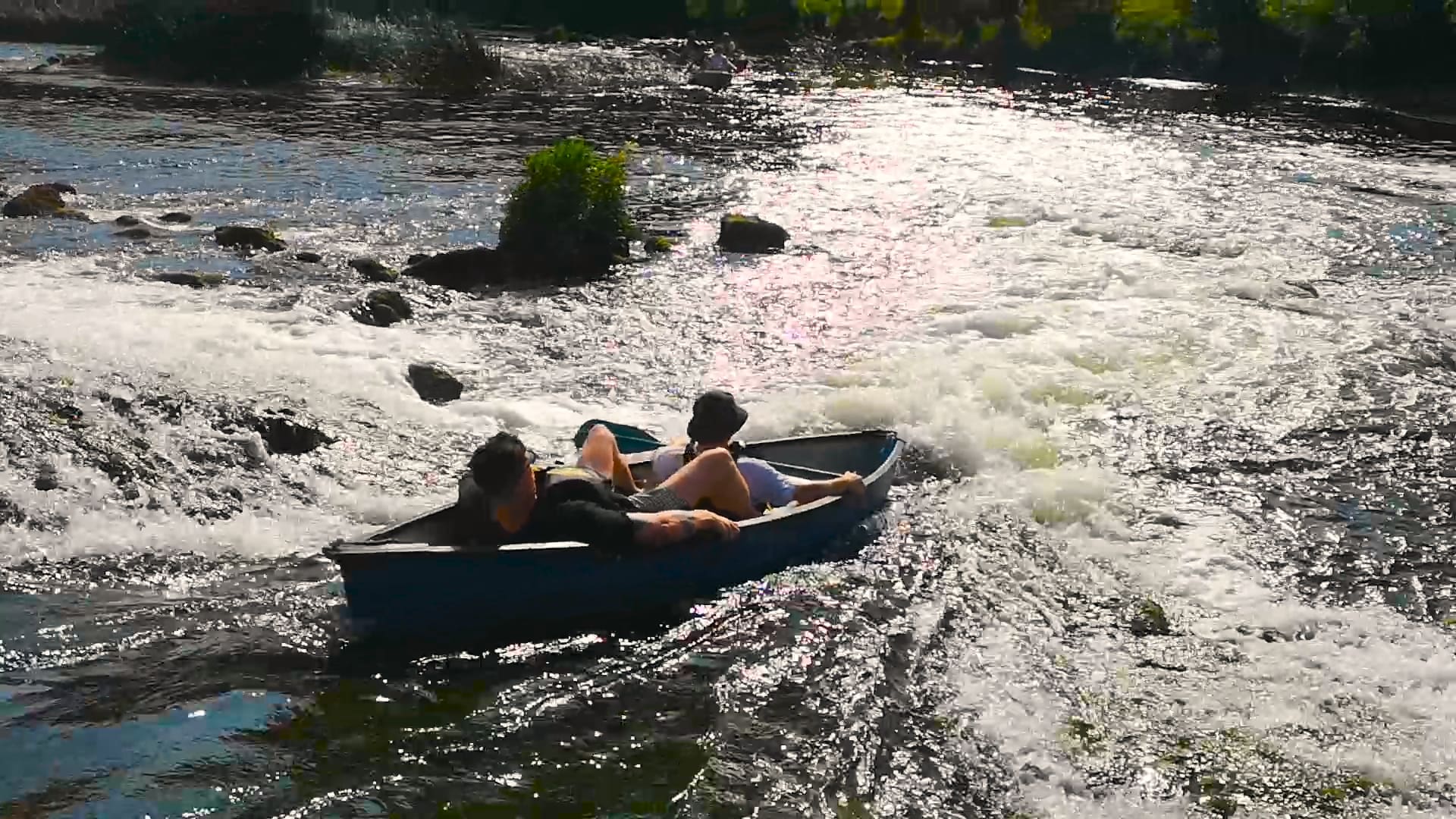
Don’t panic if your canoe capsizes. Over turned canoes float and can be flipped back over. Firstly ensure all passengers are safe before retrieving your equipment. Stay with your canoe unless it is dangerous to do so. Guide your canoe into calmer water ensuring that you stay upstream from your canoe to avoid being pinned. Try to hold onto your paddle as you will need it later. Don’t swim in the rapids just float on your back with your feet downstream. If the water is cold go ashore as soon as possible to get dry and warm.
White graphic featuring a stylised wave design

If your friend Capsizes


Offer assistance to other capsized boats, remember people first and then equipment.  If the water is cold get them ashore as soon as possible to dry off and warm up.  Be aware that they may be confused so remain calm and encourage them to do likewise.


If someone else’s canoe has dumped offer your assistance. If it comes down to a rescue, remember…it’s the people first, then the equipment. If it’s cold, get them ashore, dry them and warm them immediately. It may not occur to them that they’re uncomfortable because of confusion. Above all, keep calm and encourage the “dunkees” to do likewise.

essential gear for a 2026 Irish river canoe trip
White river Symbol graphic

Emergency Access Points on River Barrow

People paddle canoes on Irish river, surrounded by trees and hills in the background.
People paddling a canoe

Why Paddle Your Own Canoe

Because there’s nothing quite like the freedom of the river. With Paddle Your Own Canoe, you set the pace—exploring scenic waterways, discovering hidden spots, and soaking up the peace and beauty of the Barrow. We make it easy and accessible, with reliable gear, local knowledge, and flexible trip options. Whether you're chasing adventure or just need a break from the noise, this is your chance to slow down and reconnect—with nature, with friends, or simply with yourself.